

Good morning!
It’s Friday, November 28.
Tomorrow in history, we travel all the way back to the 1200s – a time when Sweden was less “lagom” and more “Game of Thrones.” On this day, the country was in the midst of a civil war, and Slaget vid Olustra (the Battle of Olustra) took place, most likely somewhere in Södermanland. Although Östergötland still insists it might have been them.
The clash was between the underage king Erik Eriksson and the influential nobleman Knut Holmgersson, better known as Knut Långe. Supported by powerful stormän – including Karl, Harald, and possibly his own father or son Holmger – Knut won the day.
The young king promptly fled to Denmark to seek refuge with his uncle, King Valdemar Sejr. Knut Långe was crowned king in 1231, but his reign was short-lived; he died in 1234. Erik returned shortly after and reclaimed the throne.
History may be messy, but at least it’s never boring.
Have a wonderful weekend!
Phil
Did you get this newsletter sent to you from someone you know? Click on the button below to subscribe for yourself. All you risk is to learn something new (perhaps even about yourself.)
Word of the week
KLURIG [KLOO-reeg]
clever; tricky; puzzling.
New Forensic Review Reopens Doubts in the Knutby Murder Case

Attribution: SVT Nyheter
Two decades after the infamous Knutby killings shocked Sweden, a new investigation suggests the woman long blamed for the murder may not have acted alone—or may not have been the killer at all.
New reporting from Aftonbladet’s 200 sekunder is stirring fresh controversy in one of Sweden’s most notorious criminal cases. According to the program, several of the country’s top forensic experts now say key elements of the original investigation into the 2004 murder of Alexandra Fossmo were mishandled or simply wrong. Their review points to additional bullet holes, conflicting trajectories, missing documentation, and even forensic evidence suggesting Alexandra may already have been dead when the au pair, Sara Svensson, fired the shots she admitted to.
Former national crime scene investigator Sonny Björk says forensic photos not presented in court show at least five bullet impacts, not the three the case was built around. He also argues that bullet angles contradict Svensson’s account of standing to the left side of the bed when she shot. One hole appears to originate from the right side—impossible under her version of events. “It opens the question of an alternative perpetrator who may have shot Alexandra before Sara arrived,” Björk tells the program.
Professor of forensic medicine Anders Eriksson goes further, claiming the lack of bleeding in one gunshot wound indicates Alexandra was already dead when that bullet struck. If true, it would fundamentally challenge the timeline that led to Svensson’s conviction for murder and attempted murder.
Crucially, the new findings revisit a case where it was never believed Sara Svensson acted alone. Her pastor and Alexandra’s husband, Helge Fossmo, was convicted of instigating both the murder and a related attempted murder. He manipulated Svensson through spiritual and psychological pressure, directing her actions through months of text messages and “prophetic” instructions. That Helge played a central role has never been in dispute; what the new forensic review raises is whether his involvement was even more direct than previously established—or whether a third party beyond Helge and Sara may also have been present or active in the events leading to Alexandra’s death.
Neither prosecutors nor police officials have commented on the findings. For now, the new analysis adds another twist to a case defined by secrecy, manipulation, and a religious sect whose internal dynamics shocked the nation—leaving open the possibility that the full truth of Knutby is still unresolved.
Update: High-profile defense attorney Johan Eriksson has taken on Svensson’s case and says he will seek a retrial, calling the findings “completely unreasonable” and arguing that “you can’t kill someone who is already dead.” Prosecutor Elin Blank, who led the original investigation, has re-examined the materials but maintains that the information isn’t new and was presented to the court at the time. Meanwhile, criminologist Leif GW Persson calls the investigative lapses “absolutely jaw-dropping.” Whether the case will be reopened now rests with the Supreme Court.
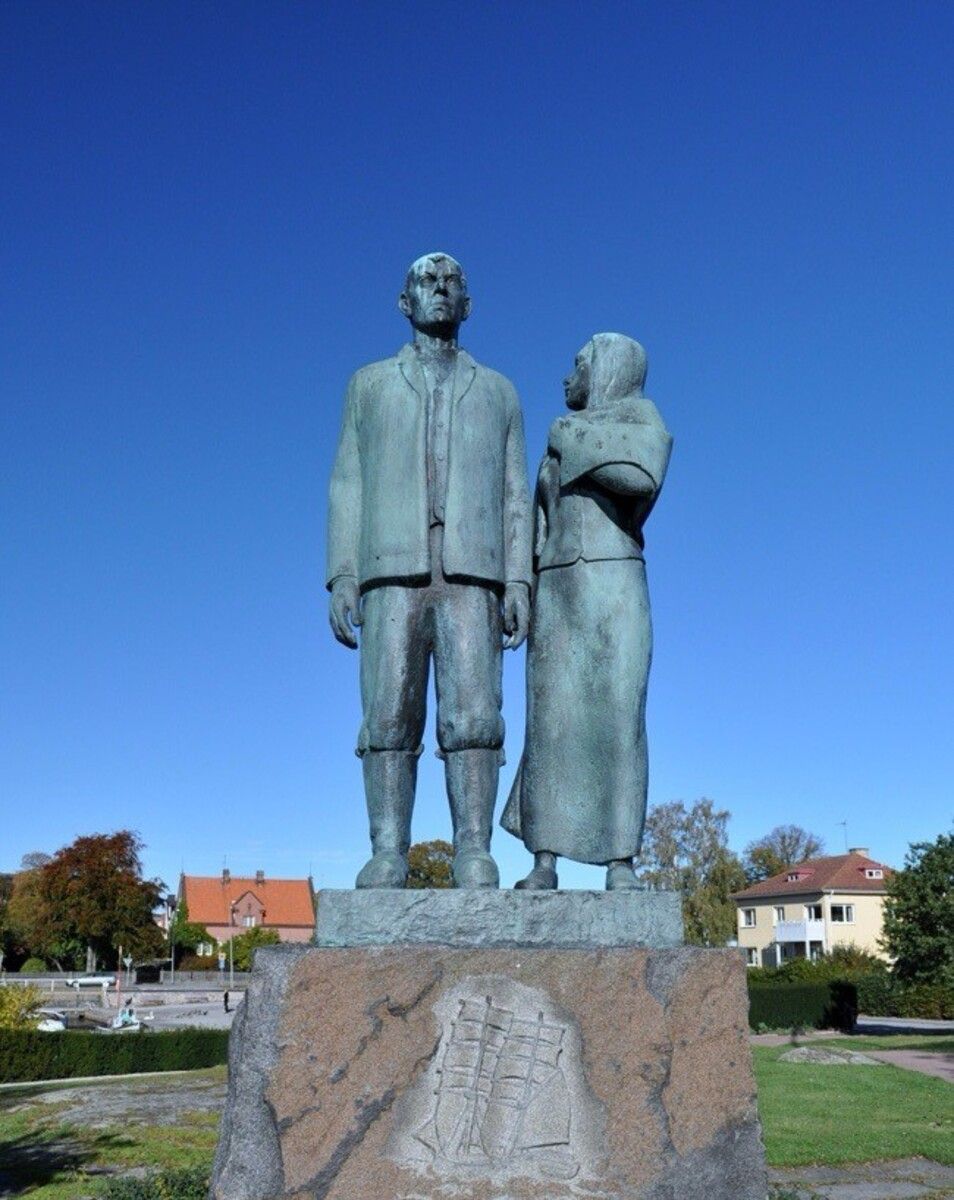
Postcard from the North

Simrishamn
In other news
💒 The EU Court of Justice has ruled that all EU member states must recognize same-sex marriages legally performed in another member state. The decision came after Poland refused to acknowledge the marriage of two Polish citizens who wed in Germany, citing its national ban on same-sex marriage. According to Reuters, the court found that Poland acted unlawfully in denying this recognition.
🪖 Sweden is investing 3.5 billion kronor in new air-defense systems, Defense Minister Pål Jonson announced. The goal is to strengthen protection against missiles, drones, and helicopters. The Swedish Defence Materiel Administration has signed a 2-billion-kronor contract to purchase the Iris-T (known as “Eldenhet 98”), with an additional 1.5 billion kronor allocated for the vehicles and systems needed to deploy the missiles.
🌍 The Swedish government will raise the voluntary repatriation grant from 10,000 kronor to 350,000 kronor per adult starting January 2026, a change welcomed by 67-year-old Golahmad Jamili. Jamili, who fled Afghanistan seven years ago and now lives alone in Höör after separating from his family, hopes the higher grant will allow him to return to his home country. Struggling with loneliness and language barriers in Sweden, he dreams of using the support to buy a home and start a small business in Afghanistan.
Poland Picks Swedish Submarines in a Multi-Billion Deal Set to Reshape Baltic Security

Attribution: Saab Kockum
Poland has announced plans to buy three Swedish A26 submarines from Saab—a rare, major export for Sweden’s defense industry and a move analysts say could shift the balance of deterrence in the Baltic Sea.
Poland’s government confirmed that it has chosen Saab’s A26 model, a next-generation submarine already under construction for the Swedish Navy. The vessels will be built primarily at the historic Kockums shipyard in Karlskrona, with some involvement from Polish industry. Though the contract isn’t signed yet, officials on both sides are calling the decision a milestone. Saab CEO Micael Johansson says it’s the company’s biggest breakthrough since taking over the submarine program from Germany in 2014, and Prime Minister Ulf Kristersson described the choice as proof that Swedish defense manufacturing “stands strong on the world stage.”
Poland’s vice-prime minister puts the value of the deal at roughly 26 billion SEK, making it not just a symbolic partnership but a long-term industrial and military commitment. For Sweden, the purchase means shared development costs, shared logistics, and a powerful strategic partner across the Baltic – something the Swedish submarine service has lacked for years. Local impact will be significant too: Kockums expects major growth, and the Swedish Navy gains interoperability with a neighbor that faces similar security concerns.
Defense analysts say the deeper importance lies beneath the surface. Literally. More A26-class subs operating in the Baltic increases NATO’s ability to stay unpredictable, a key factor in deterring Russian naval activity. Or as one Swedish security reporter put it: the harder it is for Russia to guess where allied submarines are, the less likely they are to start something.
Swede-ish Notes

Attribution: DN
The Math Isn’t Mathing in Swedish Municipalities
There’s a quiet crisis unfolding across Sweden — not dramatic enough for international headlines, but serious enough that local politicians are losing sleep. New data from Ekonomifakta shows that 230 of Sweden’s 290 municipalities now have fewer working-age residents than people who need supporting — children, teens, and older adults. In other words, the tax base is shrinking while the bill for schools, healthcare, and eldercare keeps growing.
If you grew up in a small Swedish town, this story might feel familiar. In places like Härnösand — where 100 workers now have to support 123 non-workers — residents describe the feeling of a community slowly tightening at the seams. Shops closing earlier, fewer employers sticking around, and young people quietly planning their exit. “It’s hard when everything shuts down,” one father tells SVT, imagining why his son might choose another future somewhere else.
The reasons behind this are no mystery: Swedes are having fewer children, the population is aging, immigrant labor has slowed, and unemployment remains stubbornly high. Put simply, the demographic pyramid is starting to look more like a rectangle.
Experts point to four possible solutions: lower unemployment, higher birthrates, more labor immigration, and increased productivity. All politically tricky, none quick fixes. And the uncomfortable truth is that Sweden — a country that once proudly boasted of its cradle-to-grave welfare model — now risks communities where too few people are left paying for that cradle, that grave, and everything in between.
Any system can drift into imbalance; not with a bang, but one slowly shrinking tax base at a time.
Do you have a story from the past that could be worth sharing? I bet you do! Or would you like to see something else in the newsletter and have suggestions for topics? If so, please reach out!
