
Good morning!
It’s Friday, June 12.
There are few things that unite Swedes quite like discussing the weather ahead of Midsummer.
And for once, the forecasts appear to be delivering good news. Meteorologists are predicting sunshine and temperatures of around 25°C (77°F) in parts of southern Sweden this weekend. If that holds true, it may be one of the more pleasant Midsummers in recent memory.
This is significant because Midsummer weather occupies a unique place in the Swedish psyche. A rainy Christmas is very disappointing. A rainy Tuesday in November is expected. But a rainy Midsummer? That feels personal.
We hope the sun finds you too next Friday.
Ha en underbar helg!
Phil
Word of the week
UPPTÄCKARGLÄDJE [oop-TECK-ar-gled-yeh]
joy of discovery; delight in exploring.
Sweden’s Summer Soundtrack Is Set as ‘Sommar i P1’ Reveals Its 2026 Lineup

One of Sweden’s most enduring summer traditions unveiled its latest cast yesterday, with business leaders, authors, athletes, artists, and public figures all set to take the microphone for this year’s edition of Sommar i P1.
For many Swedes, summer doesn’t officially begin until the first episode of Sommar i P1 airs. Yesterday, Sveriges Radio revealed the 2026 lineup, introducing 58 hosts who will share personal stories, life lessons, and reflections between June 20 and August 16.
As usual, the list mixes household names with less familiar voices. Among the most recognizable participants are DJ and producer Sebastian Ingrosso, actor Joel Kinnaman, entrepreneur Sebastian Siemiatkowski, author Ruth Kvarnström-Jones, and former football star Behrang Safari. The lineup also includes voices from science, journalism, business, and international affairs, reflecting the program’s longstanding formula of combining celebrity appeal with broader societal perspectives.
Program director Bibi Rödöö pushed back against the common perception that the show has become dominated by trauma narratives, arguing instead that the goal remains authentic storytelling in all its forms. This year’s hosts are expected to cover everything from entrepreneurship and global politics to family, grief, identity, and personal triumphs.
The season opens on Midsummer Day and concludes in mid-August, continuing a tradition that has become one of the most listened-to and discussed features of the Swedish summer calendar. In a media landscape increasingly driven by short-form content and algorithms, Sommar i P1 remains a rare space where people are simply given time to tell their stories.
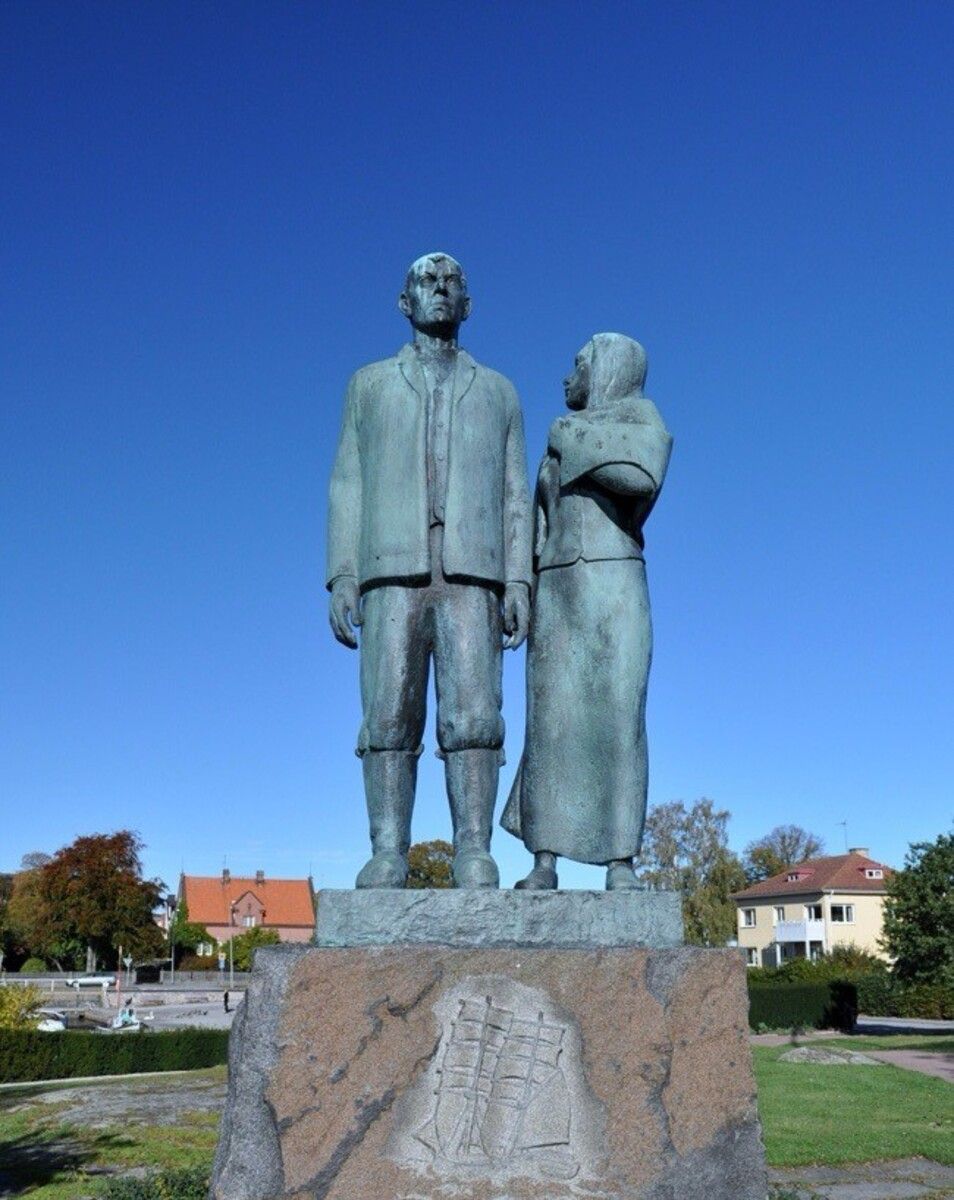
Postcard from the North

Bolmen, Ljungby kommun
In other news
🎓 A school in Stockholm is testing a new support model where pupils are more frequently divided into smaller groups for parts of the school day. Supporters say the approach improves concentration and gives students who struggle in a traditional classroom environment a better chance to learn, with some pupils describing it as a reward rather than a punishment. Critics, however, warn that increased separation of students could risk stigmatization or discrimination if not handled carefully.
⚽ A common belief in Sweden is that fathers take extra parental leave during major sporting events such as the FIFA World Cup or the Olympics so they can watch the games. However, a new analysis by the Swedish Social Insurance Agency found no evidence of a “World Cup effect,” with fathers’ use of parental leave during tournaments matching normal patterns for the same months in other years. The agency concluded that seasonal factors, such as summer vacations or the period before Christmas, explain variations in leave usage much better than major sports events.
🗳️ According to SVT, the Centre Party has decided that Magdalena Andersson is its most likely candidate for prime minister after the 2026 election. Party leader Elisabeth Thand Ringqvist says that Ulf Kristersson has effectively ruled himself out as a viable option because of his cooperation with the Sweden Democrats, while the Centre Party wants a government with a stronger political center. The move marks a significant shift in the government formation debate and increases the likelihood that the Centre Party would support a Social Democratic-led government after the election.
Sweden’s Government Drops Plan to Jail 13-Year-Olds After Political Support Collapses

One of the Swedish government’s most controversial crime proposals has been shelved after it became clear there was not enough support in parliament, exposing the limits of an increasingly tough-on-crime agenda ahead of next year’s election.
The Swedish government has abandoned plans to allow children as young as 13 to be sentenced to prison for serious crimes, marking a significant reversal after months of debate. Justice Minister Gunnar Strömmer announced yesterday that the proposal would be withdrawn, citing a lack of parliamentary backing and the risk that the legislation would be voted down altogether.
The original proposal was designed to target the growing number of minors recruited by criminal gangs to carry out shootings, bombings, and contract killings. Government officials argued that the justice system needed stronger tools as organized crime increasingly relied on children who were below the age of criminal responsibility. More than 50 children under 15 were investigated for suspected murder or attempted murder last year alone.
Instead of lowering the threshold to 13, the government now plans to pursue a less far-reaching reform that would reduce the age of criminal responsibility from 15 to 14. The revised proposal is expected to be presented within weeks.
Opposition parties seized on the retreat, arguing that the government had overreached. Green Party representatives described the move as evidence of a government scrambling to maintain credibility on crime policy, while critics noted that a majority of expert bodies and public agencies had opposed the original proposal.
The episode highlights a growing challenge for the government: balancing public demands for tougher action against gang violence with concerns from legal experts, child welfare advocates, and even parts of its own parliamentary base. With an election approaching, crime remains one of the defining issues in Swedish politics, but this week showed that even hardline proposals have their limits.
Swede-ish Notes

The Question Behind the Questions
For many Swedes, election season begins not with a campaign rally or a televised debate, but with a valkompass, a voting compass.
SVT launched its 2026 version this week, allowing voters to compare their views with those of political parties and individual candidates through a series of carefully selected policy questions. The last election cycle saw millions of uses, making it one of the country's most influential political tools.
There is something distinctly modern about the idea. Politics, reduced to a questionnaire. Thirty-five questions, a few minutes of your time, and an algorithm tells you which party is closest to your views.
And to be fair, these tools are often genuinely useful. They encourage people to think about issues they might otherwise ignore. They can reveal surprising alignments. Many voters discover that the party they have always supported is not necessarily the party that best matches their current views.
Yet every valkompass also raises an unavoidable question: what is left out?
The creators spend months selecting questions designed to be relevant and politically distinguishing. Questions where parties largely agree are often excluded. That makes sense from a practical perspective. But it also means that the picture voters receive is shaped by the questions chosen as much as by the answers themselves.
The public debate around the new compass reflects this. Some users praise it for highlighting real differences between parties, while others argue that certain policy areas receive too little attention or that the wording of some questions influences the outcome.
Perhaps the most useful way to view a valkompass is not as a political GPS, but as a conversation starter. It can tell you where you stand on a particular set of issues. It cannot tell you what matters most to you, what kind of leadership you trust, or what vision of the country you ultimately believe in.
Those questions remain yours alone to answer.
Do you have a story from the past that could be worth sharing? Or would you like to leave a suggestion? Please reach out!
