
Good morning!
It’s Friday, May 1.
Yesterday, Sweden lit up. Literally. From student cities like Uppsala and Lund to small towns across the country, Valborg (Walpurgis Night) was celebrated with camping in city parks, bonfires, singing, and the unmistakable feeling that spring has finally arrived.
In aforementioned Lund, the celebrations have been going for quite a few days (Skvalborg, Kvalborg, Valborg, Finalborg). Oh, to be young.
And today? A well-earned pause.
May 1 is a “röd dag” in Sweden, a public holiday rooted in the international labor movement. Since the late 19th century, it has been a day to recognize workers’ rights and the role of organized labor in shaping modern society. Across Sweden, it is still marked by marches, speeches, and gatherings – though for many, it also simply means a day off to recover from last night’s celebrations.
Spring, solidarity, and a slightly slower morning.
Ha en underbar helg!
Phil
Word of the week
VARSAM [VAR-sahm]
gentle; careful; considerate.
Sweden’s King Turns 80: But Retirement Isn’t on the Agenda

King Carl XVI Gustaf marked his 80th birthday yesterday with royal pageantry across Stockholm—while making one thing clear: stepping down isn’t part of the plan.
Sweden went full ceremony mode as King Carl XVI Gustaf celebrated his milestone birthday with a packed schedule that blended tradition, spectacle, and a touch of personal reflection. The day featured everything from a thanksgiving service and military tributes to a gala dinner at the Royal Palace, with crowds gathering to catch a glimpse of a monarch who has now spent more than five decades on the throne.
But behind the celebrations, the king used the moment to address a question that tends to follow long-reigning monarchs: when to step aside. His answer was unequivocal. Abdication, he suggested, simply isn’t part of the job description. Instead, he emphasized that a monarch serves for life—as long as health and ability allow.
That stance puts him at odds with a growing trend among European royals, including Denmark’s former queen Margrethe II, whose recent decision to abdicate caught him off guard. Still, Carl Gustaf framed continuity as a strength, pointing to the importance of stability while also highlighting the role of Crown Princess Victoria as the future of the monarchy.
The tone wasn’t purely institutional. In a radio segment aired alongside the celebrations, the king shared a rare personal memory from his youth—one of the few times he experienced life as an anonymous Swede—offering a reminder of the human behind the crown.
At 80, the message is clear: while the celebrations may mark a milestone, they don’t signal a transition. For Sweden’s king, the job is still very much ongoing.
Postcard from the North

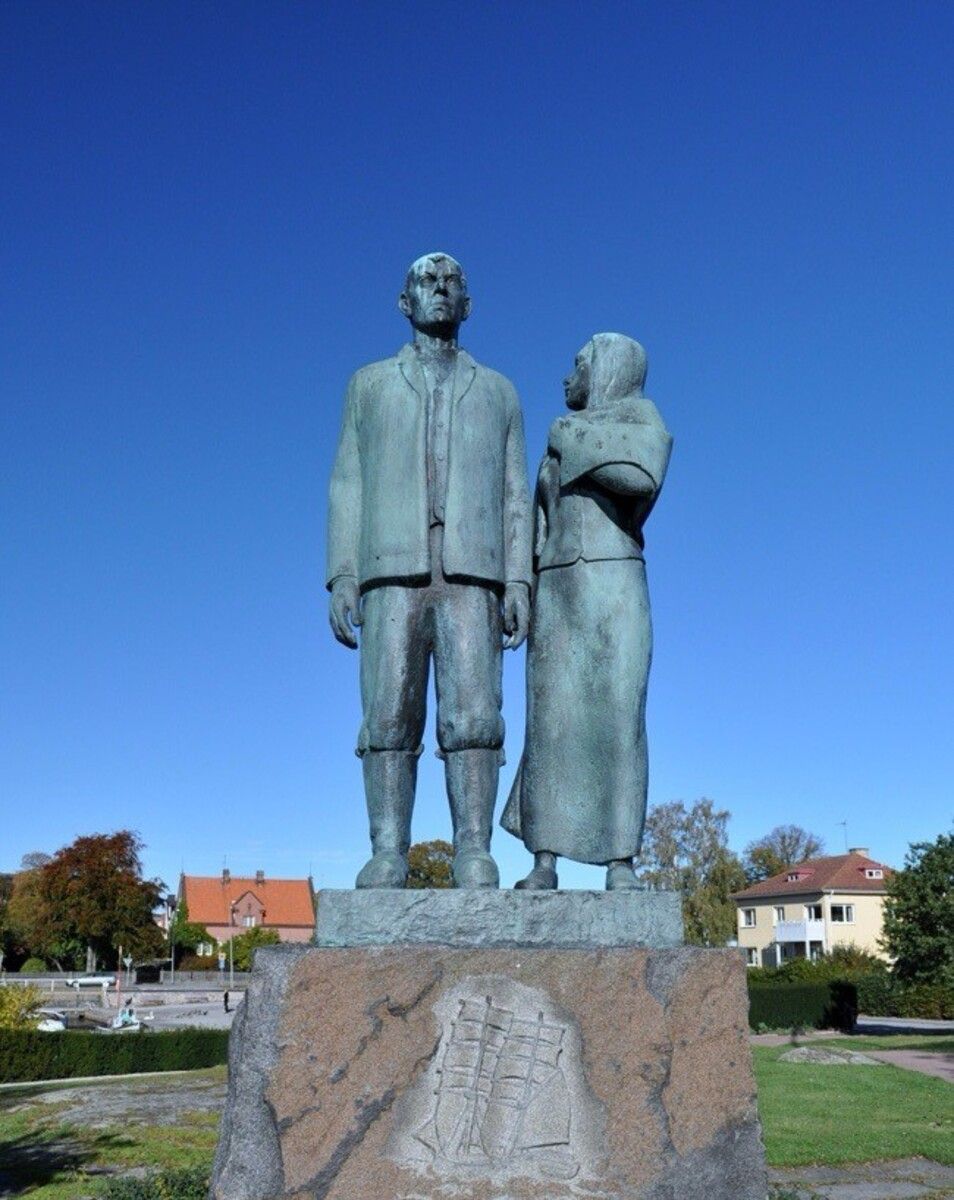
Kävlinge
In other news
🕊️ Sweden’s Prime Minister Ulf Kristersson says he is relieved that Donald Trump and other guests were unharmed after a shooting at a gala dinner in Washington. He stressed that violence and threats against politicians and journalists must never be accepted, as they undermine democracy. The incident caused panic at the scene, with witnesses describing chaos as authorities continue to investigate the motive.
⚖️ A new Swedish law allows repeat offenders convicted of serious violent or sexual crimes to be detained indefinitely under a measure called “preventive detention.” The sentence can be extended in three-year intervals based on court decisions informed by risk assessments from the National Board of Forensic Medicine. Supporters say it improves public safety, while critics argue it risks imprisoning people indefinitely for crimes they have not yet committed.
💻 In a test by SVT Nyheter, an economic commentator tried working for a week without using American tech services to see if “digital independence” is realistic. The experiment showed that while European and open-source alternatives exist, switching comes with practical difficulties and reduced convenience in everyday work. The broader context is growing concern in Europe about dependence on U.S. tech companies and efforts to build more independent digital infrastructure.
Military Drills Go Public—Swedes Urged: Don’t Post What You See

Sweden’s largest military exercise in years is now unfolding across the country—and authorities have a clear message for civilians: what you see, don’t share.
As thousands of soldiers moved across Sweden yesterday as part of the massive Aurora 26 exercise, officials issued an unusual but pointed warning: avoid posting photos or information about military activity online. The concern is simple—what might seem like harmless content could, in the wrong hands, reveal sensitive details about troop movements or infrastructure.
The scale of the exercise explains the heightened caution. Around 18,000 personnel from Sweden and more than a dozen allied countries are participating in drills taking place on land, at sea, and in the air, all designed to simulate a rapidly escalating military threat.
On the ground, the activity is hard to miss. In Hallsberg, Home Guard units trained in urban environments, practicing how to secure critical infrastructure like rail hubs against potential sabotage. Meanwhile in southern Sweden, soldiers at Revingehed rehearsed combat scenarios using drones for both surveillance and attack—drawing directly on lessons learned from the war in Ukraine.
The message from authorities is that this visibility comes with responsibility. Increased military traffic, low-flying aircraft, and armed personnel may be part of daily life for the next couple of weeks—but broadcasting it in real time could undermine the very purpose of the exercise.
Aurora 26 is ultimately a stress test of Sweden’s defense as a NATO ally, including how quickly and effectively it can operate alongside international partners. But as the drills play out in public spaces, the exercise is also testing something less formal: how civilians behave when national security unfolds right outside their window.
Swede-ish Notes

A Ship Beneath the Surface
Sometimes history does not arrive in archives or textbooks, but in fragments of wood on the seabed.
This week, a shipwreck discovered in Kalmarsund is believed to date back to the late 1500s. Found by the Swedish Armed Forces during an exercise and later examined by regional antiquarians, the wreck sits about 20 meters below the surface. Its outline is still visible. Parts of what may be a galley have been identified. In other words, this is not just debris. It is a snapshot.
If the dating holds, the vessel comes from a period when Sweden was still in the process of becoming Sweden. The late 16th century was an era of consolidation, conflict, and cautious expansion. Ships like this one were not merely transport. They were infrastructure, carrying timber, iron, grain, or perhaps soldiers along the Baltic routes that tied the realm together.
What makes the find quietly remarkable is not its size, it is relatively small, but its survival. Wooden vessels from this period rarely remain this intact unless conditions are just right. The Baltic Sea, with its low salinity, tends to preserve rather than destroy. It turns shipwrecks into time capsules.
There is also something telling in how the discovery is being handled. The plan is not to recover the wreck, but to protect it where it lies. Swedish heritage law is clear on this point. These remains are not objects to be displayed, but environments to be preserved.
So for now, the ship stays where it sank, somewhere between then and now. A reminder that beneath fairly ordinary waters, there are still stories waiting, not to be retold, but simply to be left undisturbed.
Do you have a story from the past that could be worth sharing? Or would you like to leave a suggestion? Please reach out!
