

Good morning!
It’s Friday, February 20.
Today in 1636, Axel Oxenstierna laid the foundation for what would become the Swedish postal system.
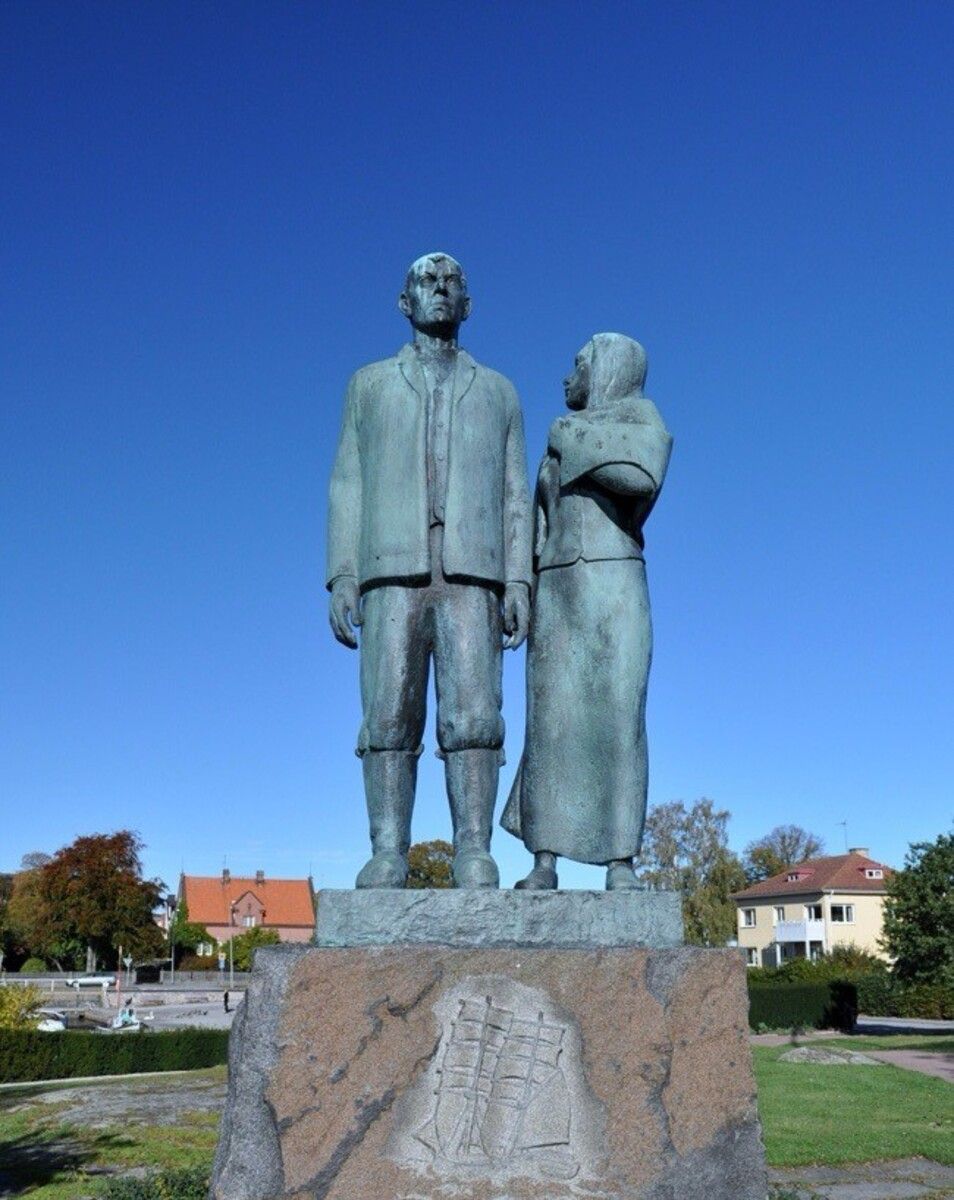
Oxenstierna (pictured above) held the title rikskansler, which was roughly equivalent to a Lord Chancellor or chief government administrator. In practice, he was one of the most powerful officials in Swedish history. During the reign of Gustav II Adolf, and especially after the king’s death in 1632, Oxenstierna effectively ran the Swedish state and helped transform Sweden into a major European power.
The 1636 postal ordinances were part of his broader reforms to build a modern, efficient state administration. These rules helped create the early structure of what later became Postverket.
Postal routes already existed, though. As early as 1620, mail was carried between Stockholm and Hamburg. But from 1636 onward, certain farmers were required (in exchange for tax relief) to help transport mail between major cities across the Swedish realm.
By 1685, the postal network stretched across vast territories from Torneå in the north, S:t Petersburg (then Nyen) in the east, Stettin in the south, and into Svenska Pommern and northern Germany in the west.
Have a wonderful weekend!
Phil
Did you get this newsletter sent to you from someone you know? Click on the button below to subscribe for yourself. All you risk is to learn something new (perhaps even about yourself.)
Word of the week
ÖVERRASKA [OH-ver-rah-ska]
to surprise.
Swedish Intelligence Warns of Concrete Russian Military Threat to NATO and Sweden

Attribution: Omni News
Sweden’s military intelligence service says the security environment is deteriorating fast, warning that Russia’s willingness and capability to use force—military and hybrid—is rising across multiple time horizons.
Sweden’s military intelligence agency, Must, says the military threat from Russia is now both serious and concrete, with direct implications for NATO and Sweden. In its 2025 annual assessment, the agency states that Russia already has operational military planning targeting the region and is steadily increasing its capabilities near Swedish territory.
According to Must chief Thomas Nilsson, the threshold for Russian use of force is considered low, including both conventional attacks and hybrid operations such as cyberattacks, sabotage, and disinformation campaigns. The agency outlines three potential escalation windows. Within the next 12 months, Russia could carry out limited strikes against specific military targets. Within three to five years, it could seize strategically important territory or impose localized air or naval control. Within five to ten years, Russia could potentially conduct large-scale military operations aimed at controlling major land areas.
Must also warns that hybrid warfare is becoming more risk-tolerant and aggressive, particularly against countries supporting Ukraine. These activities often remain below the threshold of open war but are designed to weaken societies, disrupt infrastructure, and undermine political decision-making.
The report stresses deterrence as the cornerstone of Western security strategy, arguing that strong, visible military capability across NATO and its partners is essential to prevent Russia from calculating that conflict could be won.
Postcard from the North

Karlskrona, Blekinge
In other news
⛪ Authorities in Västerås want to close a Russian Orthodox church near the local airport and have applied to forcibly purchase the building, citing security concerns, according to Dagens Nyheter. The church was built with financial support from Russia, and municipal leader Staffan Jansson says the original building permit was granted “in ignorance.” The Swedish government will now decide whether a forced acquisition would violate religious freedom laws.
🗳️ Prime Minister Ulf Kristersson said in an interview with Politico that threats and harsh rhetoric from Donald Trump over Greenland have damaged trust between Europe and the United States. He believes the relationship can recover but warned he would not welcome any foreign intervention in Swedish politics ahead of the upcoming election. The article also notes that Kristersson faces political competition from Jimmie Åkesson, whose nationalist politics are compared to movements supported by the Trump administration.
🚨 Suspected gang contract killer Ildar “Scar” Galiyev has been handed over to authorities in Sweden after being extradited from Greece and arrested by police, according to SVT. Ildar Galiyev is suspected of involvement in numerous serious violent crimes and will now be questioned about the unsolved murder of rapper Einár. He has been described by police as a contract killer linked to organized gang activity and is already detained in absentia for more than 20 alleged offences.
Prostitution Investigation Expands as Swedish Case Triggers National Outrage

Attribution: Expedia
Prosecutors say a suspected multi-year prostitution scheme in northern Sweden may be far larger than first believed, while political leaders warn the case highlights the darker realities of exploitation and organized crime.
A man in Ångermanland is suspected of selling his wife for sex to more than 120 buyers over several years, according to investigators. The woman eventually reported the alleged abuse herself, triggering an expanding criminal investigation that now spans multiple regions and includes both physical and digital sex purchases. Prosecutors say resource limits mean not all suspected buyers will face charges, even as the total number continues to rise. The suspect, who denies wrongdoing, is in custody on probable cause for aggravated procuring, with charges expected in March and a trial planned shortly after.
According to reporting from SVT, investigators believe the woman’s services were marketed across multiple websites and that the activity continued for roughly three and a half years. The suspect has previous convictions including assault and coercion, and is also facing separate financial crime proceedings. Authorities have also reopened an earlier assault investigation involving the same woman.
The case has prompted sharp political reactions. Gender Equality Minister Nina Larsson called the allegations “shocking and repulsive,” comparing them to the internationally known case involving Gisèle Pélicot. She emphasized that prostitution and trafficking often intersect with organized crime and said the government will present a new national action plan to combat exploitation.
The woman told investigators she was sometimes under the influence of alcohol and drugs and cannot remember all events. Meanwhile, dozens of suspected buyers across Sweden remain under investigation, underscoring the scale and complexity of the case.
Swede-ish Notes

Attribution: SVT Nyheter
Fettisdagen: One of the Best Days of the Year (Objectively)
Fettisdagen passed earlier this week, and like most years, it briefly turned Sweden into a country united by cream, cardamom, and strong opinions.
Behind the cheerful photos of powdered sugar and perfect swirls of whipped cream sits a surprisingly serious operation. Bakeries prepare for weeks, but the final steps must be done fresh. In places like Värmland and Småland, night shifts produce tens of thousands of semlor in a single push. For many cafés, it is not just a tradition. It is the single most important business day of the year. One bakery owner bluntly said that without it, the financial impact would be catastrophic.
And yet, even semlor reflect the times. Some café owners noted slower sales leading up to Tuesday, likely tied to tighter household budgets. But when the day itself arrives, most people still allow themselves the ritual. If anything, Fettisdagen feels like one of the last small luxuries Swedes collectively agree is worth it.
The modern semla also lives in tension with its own popularity. Every year brings new variations including vegan versions, wraps, experimental flavors that sound like they were invented during a late-night brainstorming session. Still, the classic bun with almond paste and whipped cream keeps winning. Maybe because when traditions feel uncertain elsewhere, food traditions become anchors.
Then there is the famous royal cautionary tale. In 1771, King Adolf Fredrik reportedly died after an enormous meal that, according to legend, ended with several semlor eaten in warm milk – the old-style “hetvägg.” Historians debate the exact details, but the story stuck. It fits too well into Swedish cultural memory: modesty, restraint, and the quiet suspicion that excess will catch up with you. Whether or not semlor truly played a decisive role, the king’s death turned the pastry into something more than food. It is a story parents, teachers, and journalists still retell with a half-smile.
There is also something very Swedish about the semla’s broader history. Wartime rationing forced adaptations. Ingredients changed. The pastry evolved slowly rather than dramatically. The semla Sweden eats today only really spread widely in the 20th century, yet it feels ancient.
Now that Fettisdagen is over for the year, freezer drawers across the country probably contain at least one “extra” semla. Just in case winter needs softening a little longer.
Do you have a story from the past that could be worth sharing? I bet you do! Or would you like to see something else in the newsletter and have suggestions for topics? If so, please reach out!
