
Good morning!
It’s Friday, May 22.
This week, Nato’s foreign ministers gathered in Helsingborg, turning Sweden’s west coast into one of the more diplomatically tense places in Europe for a few days.
American Secretary of State Marco Rubio praised Sweden as a “great new member” of Nato, while at the same time delivering fresh criticism from Washington toward several European allies. The message was familiar: Europe must take greater responsibility for its own defence.
And perhaps nowhere does the new Swedish reality become clearer than here. Only a few years ago, Sweden was militarily non-aligned and carefully balancing its way through international conflicts. Now, Nato ministers, military convoys, and discussions about drones, Russia, and defence spending have become part of everyday Swedish news reporting.
History moves quickly sometimes.
Fortunately, one constant remains: the coffee is still strong, the cinnamon buns still excellent, and diplomats apparently also survive on both.
Ha en underbar helg!
Phil
Word of the week
DRÖMSK [DREUMSK]
dreamy.
More Swedish Children Are Being Reported to Social Services, and Parents Are Often at the Center

The number of children being flagged to Sweden’s social services is climbing sharply, with concerns about parents now emerging as the most common reason behind the reports.
Sweden’s child welfare system is under growing pressure as municipalities report a rising wave of so-called “orosanmälningar,” or formal concern reports involving children. According to new figures highlighted by SVT, issues connected to parents, including neglect, substance abuse, domestic conflict, or inability to meet a child’s needs, are now the single most common trigger behind these cases.
The increase reflects a broader shift in how schools, healthcare providers, and authorities respond to signs that a child may be struggling. Under Swedish law, professionals working with children are required to alert social services if they suspect a child could be at risk. That threshold appears to be reached more frequently than before.
At the same time, the surge is fueling debate about where the line should be drawn between intervention and overreach. In recent years, concern reports tied to school absenteeism, mental health struggles, and family instability have become increasingly common, sometimes leaving parents feeling scrutinized rather than supported.
Social workers and child welfare experts argue that early intervention is often crucial, particularly as Sweden, as the rest of the Western world, grapples with rising youth mental health problems and growing concern over children being pulled into criminal environments at younger ages.
Still, the growing number of reports is exposing a difficult balancing act: how to protect vulnerable children without creating a system where struggling families feel they are automatically treated as suspects.
Postcard from the North

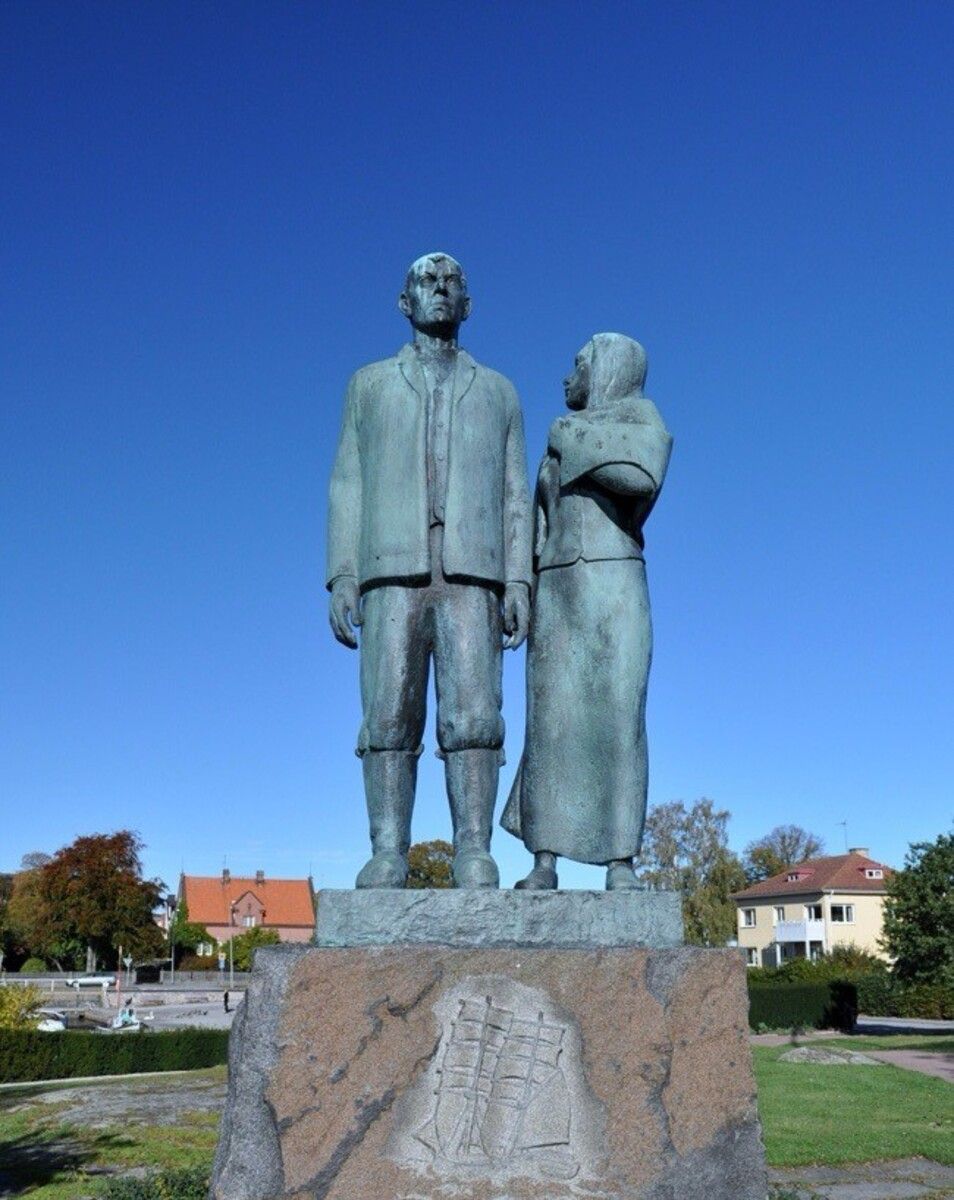
Scaniabadet, Malmö
In other news
🚢 The Swedish government, together with Supreme Commander Michael Claesson, announced plans to purchase new French-built frigates as part of a major military expansion. Defense Minister Pål Jonson said rapid delivery capability and cooperation with France and Greece were key reasons behind the decision, with deliveries expected to begin around 2030. The investment is one of Sweden’s largest recent defense procurements and reflects the country’s continued military buildup after joining NATO.
🦔 Sweden’s National Veterinary Institute (SVA) is urging the public to send in dead hedgehogs so researchers can investigate why the species has declined so sharply in recent years. Scientists want to determine whether diseases or infections could be contributing to the drop in population, as hedgehogs are now considered a threatened species in Sweden. Authorities are asking people both to report sightings and to submit dead animals for examination as part of a broader conservation effort.
🔎 Prosecutors in the high-profile Rönninge murder case have requested yet another extension of the deadline for filing charges against the suspect. The delay is due to ongoing technical analyses and the need to compile large amounts of investigative material, with prosecutors now aiming for June 16. A 26-year-old man remains in custody on suspicion of murdering a 25-year-old woman during the Christmas holiday period in Salem municipality.
Sweden’s Baby Bust Is Forcing Municipalities to Rethink Schools and Preschools

Sweden’s falling birth rate is no longer just a demographic talking point. Across the country, municipalities are now closing preschools, reshuffling resources, and preparing for what local officials describe as a major long-term challenge.
The Magnus Uggla hit Baby-boom doesn’t seem to have aged too well.
The effects of Sweden’s declining birth numbers are starting to hit local communities in real time. Several municipalities have already shut down preschools over the past year, while many others are planning restructures as the number of young children continues to shrink. According to Sweden’s Association of Local Authorities and Regions, SKR, the situation is becoming increasingly difficult for municipalities trying to balance costs with maintaining public services.
Officials say the issue extends far beyond classrooms. Fewer children today could eventually mean labor shortages, weaker local economies, and growing pressure on welfare systems in the future. But right now, the most immediate challenge is practical: schools and preschools built for larger generations are suddenly operating with too few students.
In parts of Sweden, municipalities are already merging groups, reducing staff, or closing facilities entirely. SKR’s Monica Sonde described the transition as significant, warning that communities across the country are facing the same trend rather than isolated local problems.
The shift also reflects changing social patterns. Swedes are having children later in life, while rising living costs and housing uncertainty are believed to be contributing to lower birth rates overall.
For municipalities, the challenge is becoming clear: how to adapt public services to a population that is no longer growing in the way Sweden once expected.
Swede-ish Notes

The Baltic Has Become Tense Again
For a long time, the Baltic Sea felt almost sleepy. Ferries, cargo ships, summer tourism, container traffic. Calm waters connecting Northern Europe.
Not anymore.
Over the last months, Sweden’s Coast Guard has repeatedly boarded suspicious vessels in the Baltic Sea. Ships linked to Russia’s so-called “shadow fleet” have been stopped, inspected, and in some cases prevented from continuing their journeys. One vessel leaked thousands of liters of oil into already vulnerable waters. Another case involved a Chinese captain being detained. Routes are now reportedly changing to avoid Swedish territorial waters altogether.
The details differ from case to case, but together they point toward something larger: the Baltic Sea is no longer merely a trade route. It has become a geopolitical pressure point.
What is striking is how much Sweden’s posture has changed. Historically, Sweden preferred caution at sea. Neutrality encouraged restraint. Even after joining NATO, many assumed that Swedish behavior in the region would remain measured and somewhat hesitant.
Instead, the opposite seems to be happening.
The Coast Guard boardings are not dramatic in the Hollywood sense. No missiles. No naval battles. But they send a message all the same. Sweden is increasingly acting less like a passive observer and more like a state determined to enforce rules in its own neighborhood.
That has consequences. Russia has protested. Ukraine, meanwhile, has openly praised Sweden’s actions.
And perhaps that is the clearest sign of all. The Baltic Sea, once mostly associated with commerce and environmental issues, now sits directly inside the wider tensions shaping Europe.
Swedes are slowly adjusting to that reality. The sea is still beautiful. But it no longer feels quite as distant from world affairs as it once did.
Do you have a story from the past that could be worth sharing? Or would you like to leave a suggestion? Please reach out!
