
Good morning!
It’s Friday May 8.
Today in 1319, a three-year-old inherited the Norwegian throne.
When King Håkon Magnusson died, his grandson Magnus Eriksson became King of Norway. Just a few months later, the toddler was also elected King of Sweden, placing the two kingdoms in a personal union that would last for nearly 25 years.
With Håkon also died the final descendant of Norway’s ancient Fairhair dynasty, which had ruled the country for almost 450 years. In other words: a toddler inherited not only two crowns, but the end of an era.
Swedish bureaucracy may occasionally feel slow today, but at least we no longer hand the keys of the kingdom to preschoolers.
Ha en underbar helg!
Phil
Word of the week
GENVÄG [YEN-vehg]
shortcut.
Politics Is Becoming a Dating Filter for Sweden’s Gen Z

Young Swedish men and women are drifting further apart politically—and according to users on dating apps, the divide is no longer just showing up in elections. It’s showing up on first dates, too.
Sweden’s growing political gender gap is starting to reshape modern dating. Young men are increasingly leaning right politically, while young women are moving left—a trend researchers say has intensified steadily over the past decade.
And unlike older generations, Gen Z isn’t exactly keeping politics out of romance. On apps like Hinge, users can now display their political identity directly in their profiles, turning ideology into something closer to a compatibility metric than a private opinion. According to several young Swedes interviewed by SVT, political views have become a major factor when deciding whether someone is worth dating at all.
Researchers point to social media as a major driver behind the split. Young men and women increasingly consume different online content, follow different influencers, and prioritize different political issues—creating parallel digital realities shaped by algorithms.
The divide is becoming statistically hard to ignore. Recent polling shows that young women overwhelmingly support left-leaning parties, while young men are far more likely to back conservative and nationalist blocs.
Online reactions suggest many young people already see the shift affecting everyday relationships. In Swedish Reddit discussions, users described awkward politically charged dates and joked about ideological “dealbreakers” becoming part of swipe culture.
The result: in Sweden’s dating market, attraction may still matter—but increasingly, so does where you land on the political spectrum.
Postcard from the North

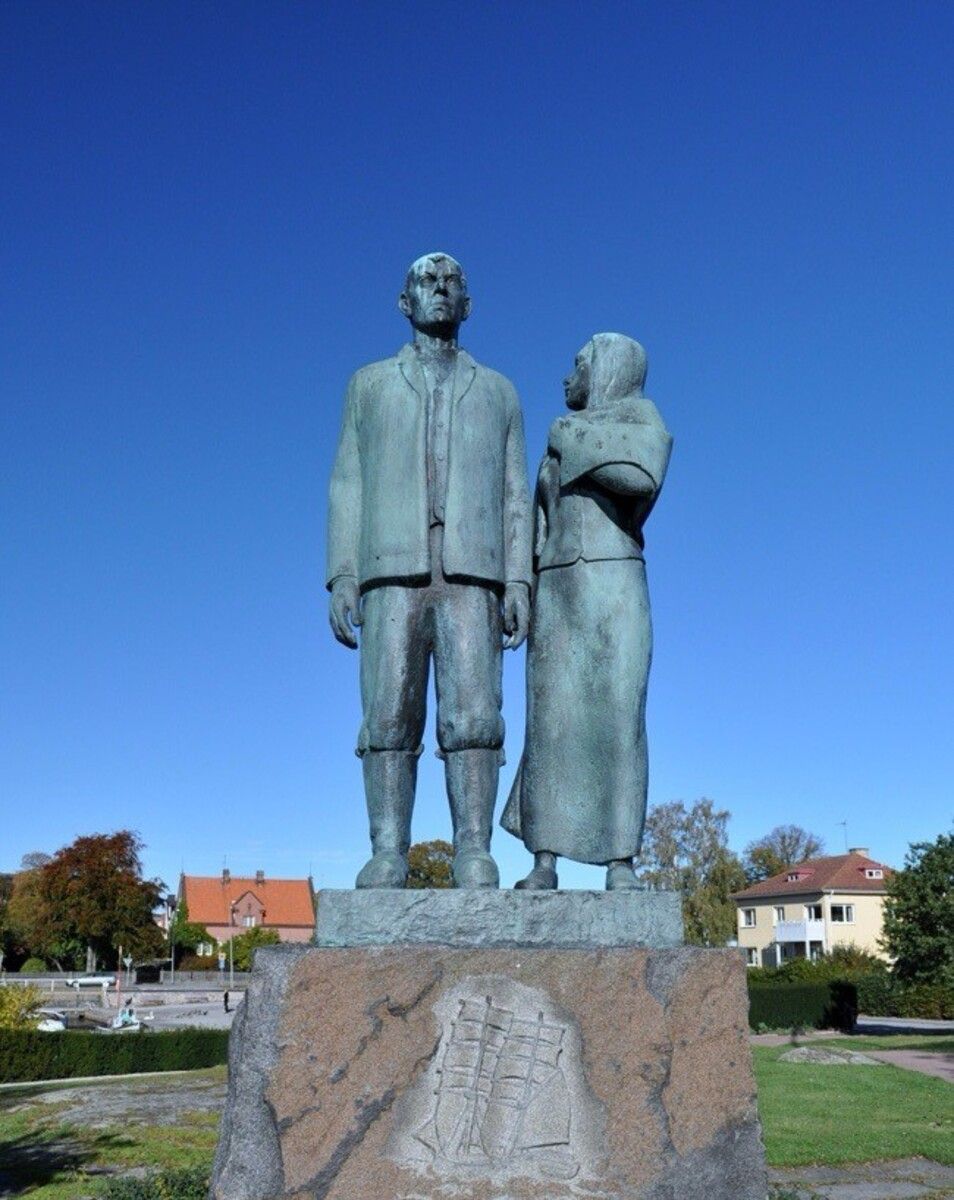
Grövelsjön
In other news
🗳️ SVT highlights four main talking points from the party leaders’ debate last Sunday, where energy policy, especially nuclear power, sparked clear divisions between the governing parties and the opposition. The debate also became heated around issues like the economy, healthcare, migration, and disputes over political tactics and rules. Overall, the discussion featured sharp exchanges and ideological clashes as the election approaches, with several moments of tension between party leaders.
🏥 Social Democratic leader Magdalena Andersson has criticized the governing Tidö parties by claiming newly delivered mothers in Skåne are forced to recover in armchairs instead of hospital beds due to healthcare cutbacks. However, an SVT Verifierar review found that the so-called “BB armchairs” in Malmö existed long before the current regional leadership and are not a new phenomenon tied specifically to today’s policies. The report therefore questions whether Andersson’s political framing of the issue is fully accurate.
📰 The terrorism trial against Swedish journalist Joakim Medin in Turkey has been postponed once again, with the next hearing scheduled for October 1. Turkish authorities want to question Medin from Sweden, but the Swedish government has refused, arguing that such cooperation would conflict with principles of press freedom and freedom of expression. Medin, who denies the accusations, says the prolonged process is mentally exhausting and fears the case could drag on for years.
Sweden’s Mosquito Summer Looks Surprisingly Chill: But There’s a Catch

After two relatively mosquito-light years, experts say Sweden is heading toward yet another calmer summer for bug-bitten residents. The reason? An unusually dry climate that’s making life difficult for mosquitoes—but not necessarily for every species.
If your summer plans include fewer itchy evenings on the patio, Sweden’s mosquito forecast is bringing good news. Researchers say the country is likely headed for another season with lower-than-normal mosquito levels, thanks to exceptionally dry ground conditions following consecutive winters and springs with limited rainfall.
According to mosquito researcher Anders Lindström at Sweden’s National Veterinary Institute, many mosquito species depend heavily on wet soil and standing water to reproduce. With soil moisture levels now described as “extremely low” in several parts of the country, mosquito populations are struggling to develop at the same scale seen during wetter years.
That marks a noticeable shift from 2024, when Sweden experienced a particularly intense mosquito season severe enough for the government to allocate additional funding for mosquito control efforts.
But before Swedes start declaring victory over summer pests, researchers are flagging a new concern: climate change is helping new mosquito species move northward. Some of these species are more resilient to dry conditions and may carry diseases such as West Nile fever or dengue-related viruses.
To track the changing landscape, the Swedish government has now provided extra funding for nationwide mosquito surveillance. The goal is less about preventing itchy arms—and more about identifying which new species are beginning to establish themselves in Sweden before they become a larger public health issue.
Swede-ish Notes

Still Looking West
Europeans have spent generations looking westward toward America. Sometimes with admiration, sometimes with disbelief, and often with both at the same time.
It is a strange fascination when you think about it. America is not the closest country to us culturally, geographically, or politically. Yet few places occupy so much space in the European imagination. We follow American elections as if they were our own. Sometimes more. We consume American movies, music, technology, and scandals almost by instinct. Even people who claim to dislike America rarely stop talking about the big country in the west.
Part of the appeal is obvious. The scale of the country still feels almost mythical to Europeans. The deserts, highways, skyscrapers, national parks, and sheer distances. America has always seemed larger than life. But the attraction also lies in something less tangible: the sense that history happens there first.
The stakes always appear unusually high in America. Elections feel existential. Technological breakthroughs reshape the world. Political conflicts become cultural exports. Even failures arrive on a grand scale.
For Swedes, there is also a deeper historical layer. Once upon a time, America represented escape. Hundreds of thousands left Sweden for a life that was, in many cases, objectively better than the poverty they left behind. The United States became associated with opportunity, movement, and reinvention.
Today, Europe often looks at America with a certain smugness instead. Polarization, healthcare costs, political chaos, problems with gun violence. There is almost a ritual quality to European criticism of the United States, perhaps because many Europeans suspect Americans still see themselves as exceptional.
And yet, despite all that, the pull remains.
America may no longer rank as the world’s freest society by several international measurements. Protectionism and inward-looking politics have also replaced some of the openness that once defined the country. But the idea of America still lingers, stubbornly.
Maybe I shouldn’t speak for all of Europe. And I’m not. But for me, the feeling cannot be shaken off.
Like every country, America might not perfect. It might not always be admirable. But it remains endlessly compelling.
Do you have a story from the past that could be worth sharing? Or would you like to leave a suggestion? Please reach out!
