
Good morning!
It’s Friday, May 15.
Sweden is through to the Eurovision final. Felicia qualified this week alongside several other favorites, including Finland, meaning the Nordic countries are once again dangerously overrepresented in Europe’s most important geopolitical institution: Eurovision.
And while Europe may disagree on many things these days, we can still unite around smoke machines, dramatic key changes, and countries giving each other suspiciously generous amounts of points.
That said, Israel’s participation continues to place the organizers under intense scrutiny. The criticism surrounding this year’s contest has hardly quieted down, and the debate echoing outside the arena is unlikely to fade anytime soon.
Ha en underbar helg!
Phil
Word of the week
SAMSAS [SAM-sahs]
to get along; to share peacefully.
Malmö’s “Poop Lake” Disaster Sparks Environmental Backlash

What began as an emergency sewer repair in Malmö quickly spiraled into a public health headache, a social media spectacle, and an environmental crisis after massive amounts of untreated wastewater flooded the city’s canals.
This story probably won’t help this summers’ turism to Malmö.
Residents in central Malmö were told last week to rethink everyday routines: skip long showers, avoid running dishwashers, and maybe don’t flush the toilet every single time. The unusual request came after a major sewer line failure forced utility company VA Syd to divert roughly 300 liters of untreated wastewater per second directly into Malmö’s canal system while repairs were underway.
The result was exactly what many feared. Within days, locals reported overwhelming odors, brown water, and large numbers of dead fish floating through canals near popular waterfront areas. Particularly alarming was the discovery of hundreds of dead eels, a species already considered threatened in Europe.
Authorities have since warned residents to avoid contact with canal water and temporarily advised against bathing at several beaches while testing continues. Environmental officials say oxygen depletion caused by the sewage likely triggered the large-scale fish deaths, though the full ecological impact is still being investigated.
The incident has also turned into a public relations mess. Online, frustrated residents began referring to parts of the canal as a “poop lake,” while criticism mounted over how a modern city ended up dumping raw sewage into public waterways for days.
For Malmö, the leak may eventually be repaired. Rebuilding public confidence could take significantly longer.
Postcard from the North

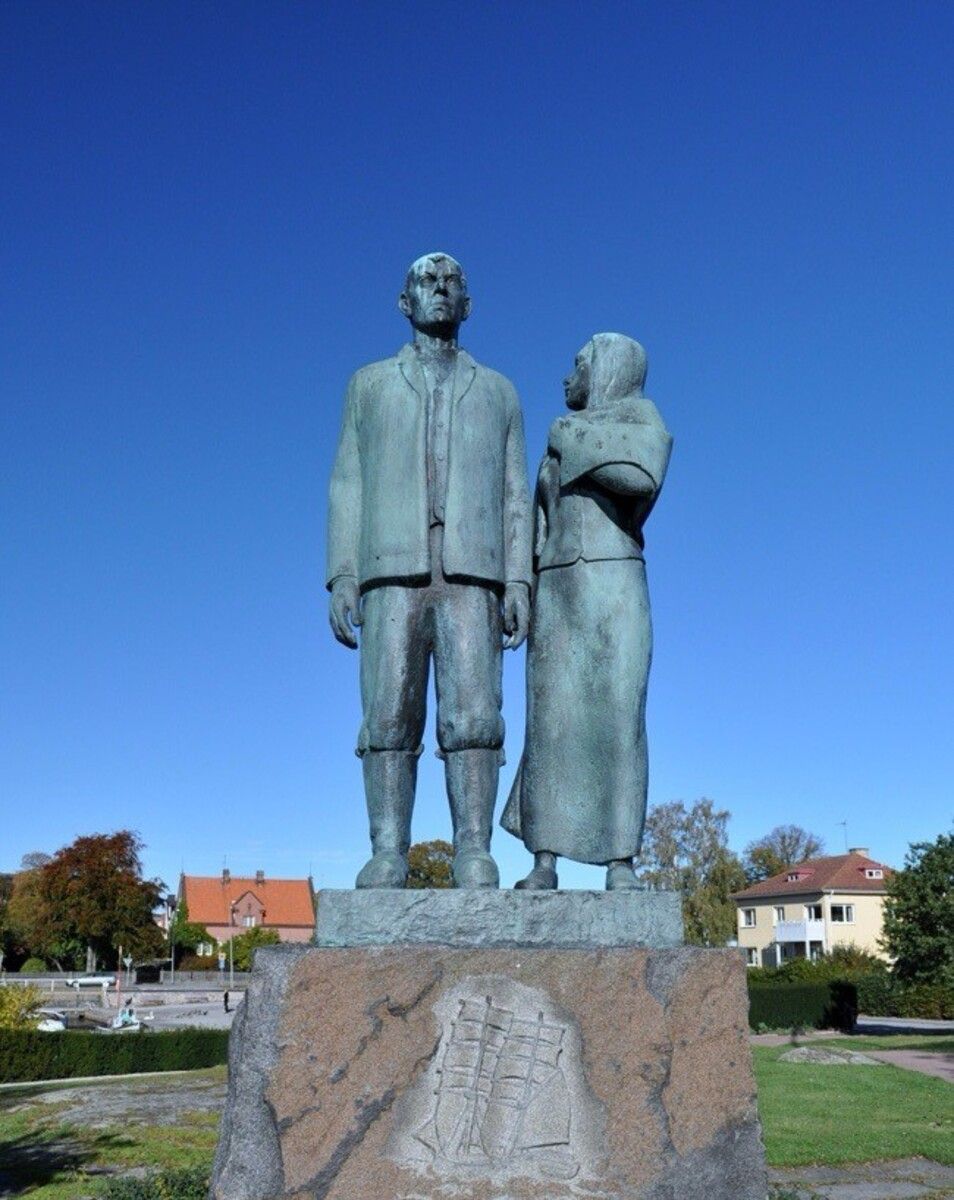
Vättern, Jönköpings län
In other news
🦅 Sweden’s golden eagle population had a record year in 2025, with 280 successful nestings and nearly 350 chicks recorded — the highest numbers since national monitoring began. Researchers say favorable weather and strong access to food helped breeding succeed across much of the country, especially in northern Sweden and on Gotland. Experts also see a long-term upward trend in the eagle population, which they describe as very encouraging for conservation efforts.
⚖️ The two doctors who were publicly linked to the infamous Catrine da Costa case in the 1980s are now seeking ex gratia compensation from the Swedish government, arguing that the case destroyed their lives and careers. Although they were acquitted of murder, the court still stated that they had dismembered the body, a conclusion they could not appeal because the relevant offense had expired under the statute of limitations. The case has regained attention after recent documentaries and investigations questioned the strength of the evidence and highlighted possible miscarriages of justice.
🧱 Iran’s embassy in Sweden has published a bizarre AI-generated video about the 1986 assassination of Swedish Prime Minister Olof Palme, using Lego-style animation to recreate the murder. According to propaganda experts interviewed by Swedish media, the clip appears designed to fuel conspiracy theories and subtly suggest possible U.S. involvement in the killing, fitting into Iran’s broader anti-American messaging. The unusual video has attracted widespread attention and criticism in Sweden, with many questioning why a foreign embassy is producing stylized propaganda about one of the country’s most traumatic crimes.
Sweden Puts Alleged “Murder Conductor” on Trial in Major Gang Crackdown

One of the most feared figures linked to Sweden’s violent gang wave is now standing trial, in what prosecutors hope will become a defining case against the country’s criminal networks.
Yesterday, proceedings began against alleged Foxtrot network leader Poya Shafie, a man prosecutors describe as a central organizer behind multiple shootings, bombings, and murder plots tied to Sweden’s gang violence in 2023. Once internationally wanted and later extradited from Iraq, Shafie is accused of orchestrating attacks from abroad while maintaining close ties to fugitive gang boss Rawa Majid.
The indictment reads like a map of Sweden’s recent gang crisis. Prosecutors allege that Shafie, often operating under the alias “Hamado” on encrypted apps, coordinated attempted murders, explosive attacks, weapons trafficking, and narcotics crimes connected to the bloody conflict between the Foxtrot and Dalen networks.
Among the allegations are claims that teenagers were instructed to carry out attacks, including a widely publicized order to shoot “anyone” wearing a Gucci cap in southern Stockholm. Prosecutors argue that Shafie acted less like a street-level criminal and more like an operational commander directing violence remotely through chat groups and intermediaries.
The trial arrives at a symbolic moment for Swedish authorities, who have increasingly focused on targeting gang leadership rather than only arresting young gunmen. Officials have repeatedly framed Shafie’s extradition and prosecution as evidence that Sweden can now reach criminal leaders operating overseas.
If convicted on the most serious charges, Shafie could face life imprisonment. The trial is expected to continue into June.
Swede-ish Notes

America Has Been Here Before
Last week, I wrote about Europe’s enduring fascination with America. How the attraction remains, even as the relationship between Europe and the United States has become more strained in recent years.
That fascination is certainly true for me. Outside of Sweden, the United States is the country where I have spent the most time. And few things capture both the romance and the chaos of the American story quite like Hamilton.
I have loved the musical for years. But this week, I finished Ron Chernow’s biography Hamilton, the book that inspired it. It is excellent. Not just as the story of Alexander Hamilton’s dramatic life, but as a window into the fragile, argumentative, deeply uncertain early years of the United States.
We often hear that America has rarely been more polarized than it is today, aside from the Civil War. But Chernow’s book is a useful reminder that fierce division has, in many ways, existed since the country’s founding.
Even then, Americans accused one another of threatening the republic itself.
On one side stood those who wanted strong states and a weak federal government, fearing centralized power above all else. On the other stood Hamilton and the Federalists, who believed the young nation would collapse without a strong central government, financial stability, and national institutions. Critics called them monarchists, even secret British sympathizers. In return, Federalists painted their opponents as reckless populists and near-separatists.
The language sounds surprisingly familiar.
Of course, today’s America is different in countless ways. But reading about the country’s early years offers a certain perspective. The United States has always been noisy, combative, and politically anxious. Americans have long believed the next election might destroy the republic.
And yet, somehow, the republic endured.
Perhaps there is some comfort in that.
Do you have a story from the past that could be worth sharing? Or would you like to leave a suggestion? Please reach out!
