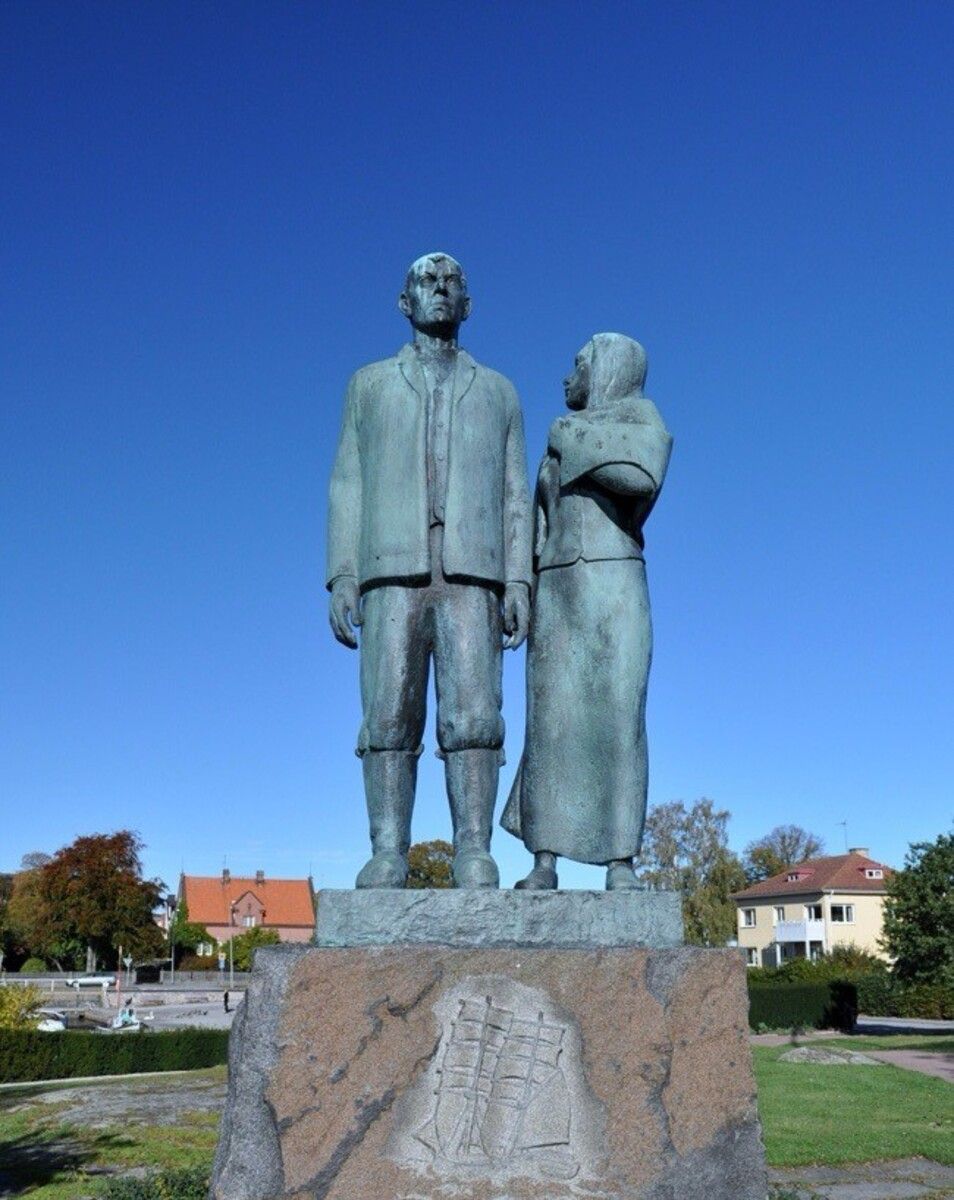


Good morning!
It’s Friday, March 20.
Today in 1600, one of the darker chapters in Swedish history unfolded.
During a Riksdag in Linköping, four high-ranking Swedish nobles were executed in what became known as the Linköping Bloodbath. They had supported King Sigismund in the recent civil war against his uncle, Duke Karl (later King Karl IX), and refused to renounce their loyalty – even when facing death.
History, it seems, has rarely been short on drama.
On a completely different (not) note: today in 2003, America and its allies initiated their strikes on Iraq which ultimately lead to the fall of Saddam Hussein.
Have a wonderful weekend!
Phil
Did you get this newsletter sent to you from someone you know? Click on the button below to subscribe for yourself. All you risk is to learn something new (perhaps even about yourself.)
Word of the week
FÖRVÄNTAN [feur-VENT-an]
anticipation; expectation.
U.S. Democracy Takes a Hit And Swedes Are Taking Notice

Attribution: Omni News
New data suggests the United States is facing a sharp democratic downturn—and public opinion in Sweden appears to be shifting just as dramatically, with a growing share of Swedes no longer viewing the U.S. as a functioning democracy.
According to the latest report from the V-Dem Institute, democratic standards in the United States have declined to levels not seen since the mid-1960s. Researchers point to weakening rule of law, reduced protections for civil liberties, and pressures on freedom of expression as key drivers behind the drop.
The U.S., once ranked among the world’s top democracies, has now fallen significantly in global standings, marking what experts describe as the steepest democratic regression in the country’s modern history—coinciding with the second presidency of Donald Trump.
That shift isn’t just academic—it’s shaping perceptions abroad. A new survey conducted by Indikator Opinion on behalf of SVT Nyheter finds that 71% of Swedes agree, at least partially, with the statement that the U.S. is no longer a democracy. Only about a quarter disagree, while a small minority remain undecided.
The numbers reveal notable divides. Left-leaning voters in Sweden are far more likely to hold a negative view of U.S. democracy than those on the right, though skepticism is widespread across the political spectrum. Gender differences also emerge, with women more critical than men.
Taken together, the findings highlight a broader shift in how the U.S. is perceived internationally—particularly in countries like Sweden, where it has long been viewed as a democratic benchmark. Now, both data and public opinion suggest that image is increasingly under strain.
Postcard from the North

Lund University’s Library
In other news
🌎 According to the Swedish Climate Policy Council, Sweden has moved further away from both its national and European Union climate targets during the current government’s term. Vice chair Olof Johansson Stenman says emissions have increased after an initially more promising outlook. The council believes the gap to meeting climate goals may be significantly larger—possibly twice as big—than the government’s own estimates.
🗳️ Former Liberal Birgitta Ohlsson is making a political comeback by running for the Centre Party (Sweden) in the upcoming election, where she is placed fourth on the Stockholm list. She explains her return with three factors – her past cancer illness, concerns about Donald Trump, and opposition to the Tidö Agreement – which she says have reshaped her values and political priorities. Ohlsson is strongly critical of her former party’s cooperation with Sweden Democrats, arguing it undermines liberal principles in Sweden.
🥔 Researcher Rasmus Elisasson from Swedish University of Agricultural Sciences says that Sweden could produce enough food domestically to feed its population even in a severe crisis with no imports. He estimates that Sweden’s agricultural output could meet the energy and protein needs of around 20 million people, well above the country’s population. However, such a scenario would require major dietary changes, with significantly reduced access to imported goods like coffee, wine, chocolate, and tropical fruits.
Liberals Confirm Dramatic Shift on Sweden Democrats After Days of Speculation

Attribution: Omni News
After days of reports hinting at a potential reversal, Sweden’s Liberal Party has now made it official: it is dropping its long-standing refusal to govern alongside the Sweden Democrats – triggering one of the most consequential political pivots ahead of this year’s election.
At a joint press conference last Friday, Simona Mohamsson confirmed that Liberalerna will open the door to a coalition government including Sverigedemokraterna, formalizing what insiders had signaled just hours earlier. The agreement, dubbed the “Sweden Promise”, outlines shared policy priorities, including implementing key Liberal education reforms and holding a referendum on adopting the euro by 2030 if the right-wing bloc wins power.
Mohamsson framed the move as pragmatic, arguing that the parties have found enough common ground to “take responsibility together.” She also emphasized safeguards, noting that any Sweden Democrat ministers would need to meet credibility standards and be vetted in advance. Jimmie Åkesson welcomed the deal, highlighting a focus on policies that unite rather than divide.
But the shift has come at a cost. The decision was negotiated in a tight inner circle and has sparked fierce internal backlash, with some senior party figures resigning and others threatening to leave if the new line is formally adopted at an upcoming party congress. Critics argue the move risks undermining core liberal values, while supporters see it as necessary for political survival.
The broader calculation is clear: with the Liberals polling near the parliamentary threshold, aligning more closely with their right-wing partners could improve the bloc’s chances of securing a governing majority. Whether the gamble stabilizes the party—or accelerates its fragmentation—remains an open question.
Swede-ish Notes

Attribution: Dagens Medicin
The Hardest Decisions in the Smallest Lives:
Some stories don’t lend themselves to easy opinions. This is one of them.
Sweden has, for years, stood out internationally for how far it has been willing to go in saving extremely premature infants — sometimes born as early as week 21 or 22. These so-called “miracle babies” have been a point of pride for parts of the medical community. Proof, perhaps, of what modern medicine can achieve when it refuses to give up.
But now, the Statens medicinsk-etiska råd is recommending a step back.
Under the new guidance, babies born in week 22 should generally not receive life-sustaining treatment, but instead palliative care. The reasoning is stark: the risks often outweigh the benefits. Survival rates are low, and many who do survive face severe, lifelong complications.
It is a shift that feels less like a medical update and more like a philosophical recalibration.
Because beneath the statistics sits an uncomfortable question: just because we can intervene — should we always?
For years, Sweden may have leaned toward “yes.” There is something deeply human in that instinct. To try. To push the boundary. To refuse to accept limits, especially when a life is at stake.
But limits exist, whether we like them or not. And drawing them is not just a clinical decision — it is an ethical one, shaped by values as much as by data.
What stands out in the new recommendations is not only where the line is drawn, but who gets a say. Parents are now expected to have greater influence. In a way, that might be the most honest part of all this: acknowledging that these decisions were never purely medical to begin with.
There are no clean answers here. Only trade-offs. And in a country where the abortion issue has long been largely settled, this kind of ethical dilemma may feel less familiar than it does elsewhere.
Do you have a story from the past that could be worth sharing? I bet you do! Or would you like to see something else in the newsletter and have suggestions for topics? If so, please reach out!
