

Good morning!
It’s Friday, January 16.
Preparing and sending out The Old Country is a privilege. Not least because of the conversations we get to have with you, our readers. But as demands in other parts of life increase, the time needed to really nerd out over the fine art of newsletter-making is, regrettably, waning.
Which brings us to an uncomfortable question – especially for a Swede. We are more or less raised to believe that talking about money should ideally be avoided altogether.
Do you feel that this newsletter gives you enough value that you would consider paying for it? And if so, is $5 a month – roughly the price of a Starbucks coffee – a step too far?
This is a genuine question, not a trap. If you have a view, we’d love to hear it. It doesn’t have to be long – a simple yes or no will do just fine. Just follow the link at the end of this newsletter to let us know.
Thank you, as always, for reading. And for sticking with us while we awkwardly clear our throats and shuffle our feet.
Have a wonderful weekend!
Phil
Did you get this newsletter sent to you from someone you know? Click on the button below to subscribe for yourself. All you risk is to learn something new (perhaps even about yourself.)
Word of the week
FÖRTJUST [feur-SHOOST
delighted; very pleased.
Carl Bildt Defends Lundin Oil’s Role as Sudan Trial Puts the Past Back on the Record

Attribution: Omni News
Former Swedish prime minister and foreign minister Carl Bildt told a Stockholm court that Lundin Oil was “a positive force” in Sudan, as he testified in the long-running war crimes case surrounding the company’s operations during the country’s civil war.
Appearing as a witness on Thursday, Bildt addressed his time as a board member of Lundin Oil between 2000 and 2006, a period now under intense scrutiny. The trial centers on allegations that the company aided Sudan’s regime in forcibly displacing civilians to clear the way for oil exploration in the early 2000s. Former executives Ian Lundin and Alex Schneiter are charged with complicity in gross violations of international law, accusations they strongly deny.
Bildt told the court he accepted the board role because he found the company interesting and believed his political experience could be useful, particularly given how closely energy and geopolitics are intertwined. At the same time, he emphasized that his knowledge of Sudan itself was limited. He said he had never visited the country and described the Lundin project as one among many international engagements competing for his attention at the time.
Prosecutors pressed Bildt on what he knew about the conflict in southern Sudan, including emails he sent in 2001 warning of indiscriminate bombings by the government. The aim, prosecutors said, was to establish that senior figures linked to the company were aware of the violence surrounding its operations.
Throughout his testimony, Bildt maintained that Lundin Oil contributed positively to the region, a claim sharply contested by prosecutors and human rights organizations. The case, which began in 2023, has already been marked by allegations of witness intimidation and has become one of the most consequential corporate accountability trials in modern Swedish legal history.
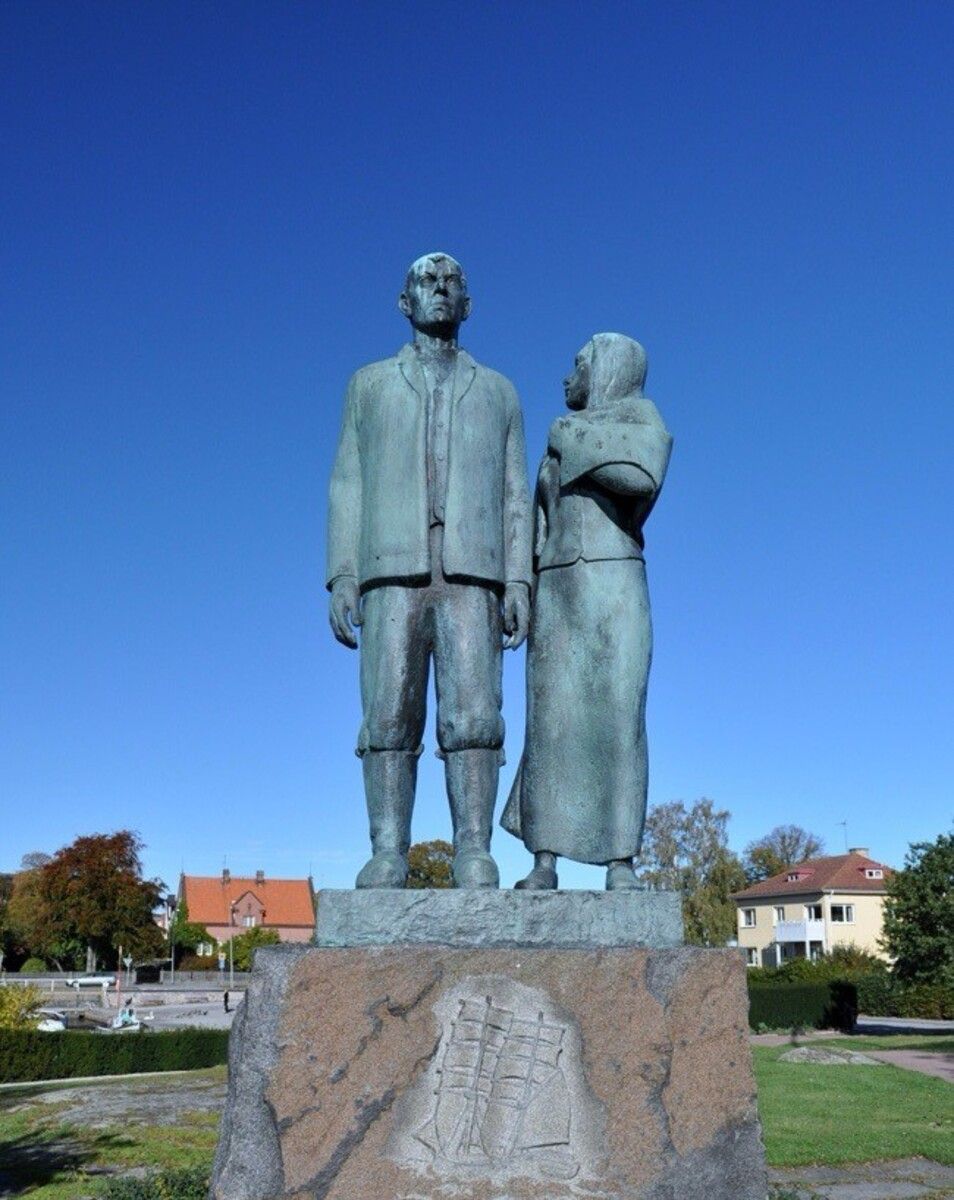
Postcard from the North

Borgafjäll, Västerbotten
In other news
🚁 The Swedish government has decided to invest in various types of drones, tasking the Armed Forces with procuring hundreds of so-called loitering munitions, often referred to as kamikaze drones. These unmanned weapons, already used by several countries, can loiter in the air and be remotely guided to strike designated targets. Further details about the purchases are expected to be presented at a press conference later today.
👍 Deadly gang violence in Sweden has been cut in half since 2022, and shootings have decreased by 60 percent, according to new government figures reported by Expressen. At the same time, the number of gang criminals arrested abroad has doubled during the current government’s term. Prime Minister Ulf Kristersson says the trend shows that the government’s tougher approach is working, but stresses that the fight against gang crime is not yet won.
🚨 An investigation by SVT Nyheter Skåne reveals that men convicted of sexual offences have been allowed to serve community service in organizations where children and young people are present. Over the past two years, at least 17 such cases were identified, including convictions for sexual abuse of children, child pornography offences, and rape-related crimes. Experts describe the practice as unacceptable and dangerous, while the Swedish Prison and Probation Service acknowledges failures and says it must review its procedures.
Sweden’s Welfare Workforce Is Burning Out—and the Bill Keeps Growing

Attribution: Framtidens Karriär Läkare
Stress-related mental illness remains stubbornly high across Sweden’s care, education, and social services sectors, with women bearing the brunt. A new report from the Social Insurance Agency paints a familiar but increasingly urgent picture: too many essential workers are off sick, and the system is paying the price.
According to the agency’s annual report released today, 92,100 people were on sick leave for psychiatric diagnoses—primarily stress, anxiety, and depression—in September 2025. That figure is 11 percent higher than in 2019 and sits at historically elevated levels. While there has been a modest 3 percent decline over the past year, the agency’s Director General, Nils Öberg, is clear-eyed about its significance: this is not a turning point, just a small dip on an uncomfortably high plateau.
Roughly 70 percent of these sick-leave cases involve women, with the highest rates found in female-dominated, people-facing professions within healthcare, schools, and elder care. These are also the sectors where staffing shortages, high workloads, and difficult working conditions are most acute. Öberg argues that this represents an “unnecessary loss” of critical skills at a time when Sweden’s welfare system can least afford it, noting that many of these absences could have been prevented with better working environments.
The economic impact is substantial. Stress-related mental illness accounted for 22 percent of all sickness benefit costs in 2024—nearly SEK 10 billion. Because psychiatric sick leave tends to last longer than other diagnoses, the costs accumulate quickly. Öberg estimates that cutting these cases in half would free up billions that could be reinvested directly into improving welfare services, rather than compensating for systemic workplace failures.
His message to policymakers and major public employers is blunt: meaningful, long-term investment is required. The alternative, he warns, is to accept a status quo that Sweden’s welfare system—and its workforce—cannot sustain.
Swede-ish Notes

Attribution: Omni
When Pop Meets Power
It takes a certain kind of modern moment for a Swedish pop star and the White House to end up arguing with each other via TikTok. Yet here we are. Zara Larsson posts an Instagram story listing what she loves and hates—immigrants, welfare, even “criminals” on one side; ICE on the other—and within days the official White House account responds with a dancing Donald Trump, soundtracked to her own hit song, “Lush Life.”
There is something almost absurdly on-brand about it all. American politics as spectacle. Social media as battlefield. Power answering protest not with policy, but with remix culture.
Larsson’s original post was emotional, even blunt, and she later clarified that it stemmed from personal frustration: her boyfriend barred from the U.S. because of a prior conviction, and outrage over a fatal shooting involving an ICE agent in Minneapolis. Her phrasing – “I love criminals” – was provocative. And it isn’t the first time Zara Larsson pulls a similar stunt. But the substance was familiar to anyone watching U.S. immigration debates from abroad: a system seen as harsh, opaque, and unforgiving, eventhough Scandinavia also has sharpened its immigration laws these last years.
The White House response, however, is the more revealing artifact. Instead of rebutting her claims, it reframes the argument as culture war entertainment: “We love deportation. We love law and order.” The use of Larsson’s own music is not accidental. It’s a flex – power signaling that it can absorb critique, monetize it, and dance through it.
For Swedish-Americans, this episode lands somewhere between amusing and unsettling. It highlights how differently politics is conducted on either side of the Atlantic. In Sweden, ministers resign over parking tickets. In the U.S., the presidency posts clapbacks on TikTok.
It’s not quite news. It’s not quite farce. But it is a telling reminder of how pop culture, politics, and power now blur. Sometimes to a beat you didn’t ask to dance to.
Do you have a story from the past that could be worth sharing? I bet you do! Or would you like to see something else in the newsletter and have suggestions for topics? If so, please reach out!
